5.0 Google reviews

5.0 Google reviews
Destination
Discover why Nyerere National Park offers Tanzania’s most diverse safaris with boat, walking, and classic game drives.
Nyerere National Park delivers one of the most complete and immersive safari experiences in Africa. What sets it apart is not only its immense size but the diversity of ways in which travelers can explore the wilderness. Here, safari is not limited to vehicles alone—boat safaris, walking safaris, and classic game drives combine to create a layered and deeply engaging journey through nature.
The Rufiji River is the park’s defining feature and ecological lifeline. Flowing through floodplains, channels, and oxbow lakes, it supports thriving populations of hippos, crocodiles, waterbirds, and large mammals that depend on its seasonal rhythms. Boat safaris along the Rufiji offer close, peaceful wildlife encounters that are impossible in vehicle-only parks, making Nyerere truly distinctive.
Nyerere is also one of the few destinations in Tanzania where guided walking safaris are a core experience rather than an optional extra. Walking through open woodland with an armed ranger brings travelers face to face with tracks, scents, and subtle ecological details—transforming safari into an educational and sensory experience.
Wildlife densities are exceptional, particularly for elephants and buffaloes, while predators such as lions and leopards thrive in the park’s vast, undisturbed habitats. Because of the park’s scale, sightings feel natural and unpressured, with little to no vehicle congestion. This freedom allows guides to follow wildlife behavior rather than rigid routes.
Africa Travel Bureau positions Nyerere as the ultimate destination for travelers seeking authenticity, variety, and space. Our itineraries emphasize expert guiding, flexible pacing, and meaningful interaction with the environment. Visiting Nyerere is not about ticking species lists—it is about experiencing Africa as a living, breathing wilderness where land and water shape every moment of the journey.
Best Time to Visit Nyerere / Selous
Plan your Nyerere safari with seasonal insights on wildlife movement, river safaris, and travel comfort.
Nyerere National Park is a highly seasonal destination, and understanding its seasonal patterns is essential for planning a rewarding safari. The park’s defining feature—the Rufiji River system—drives wildlife movement, safari activities, and accessibility throughout the year.
The dry season, from June to October, is considered the best time to visit Nyerere. During these months, water levels in the Rufiji River stabilize, wildlife concentrates along permanent water sources, and vegetation thins, making animal sightings more frequent and clearer. This is peak season for classic game drives, walking safaris, and boat safaris, as conditions are optimal across all activity types. Elephants, buffaloes, giraffes, and predators are commonly seen near riverbanks, lakes, and floodplain edges.
July through September are especially popular due to cooler temperatures, low humidity, and reliable wildlife encounters. These months offer ideal conditions for photography, as light is softer and landscapes are open. Boat safaris during this period are particularly rewarding, with hippos, crocodiles, and waterbirds present in high numbers.
The green season, from November to March, transforms Nyerere into a lush, vibrant ecosystem. While wildlife disperses over wider areas, this season is exceptional for birdwatching, as migratory species arrive in large numbers. The scenery is dramatic, rivers swell, and the park feels alive with color and movement. Visitor numbers are lower, creating a more intimate and peaceful safari experience.
From March to May, the long rains dominate, and many lodges close due to flooding and limited accessibility. Africa Travel Bureau generally advises against travel during this period unless clients seek specialized photographic or research-focused experiences.
By aligning travel timing with seasonal strengths, Africa Travel Bureau ensures that each Nyerere safari delivers optimal wildlife viewing, comfort, and access to the park’s signature activities.
Wildlife & Big Game Encounters
Discover Nyerere’s abundant wildlife including elephants, lions, hippos, and diverse birdlife.
Nyerere National Park is one of Tanzania’s most important wildlife strongholds, supporting large, free-ranging populations of mammals and birds across its vast landscapes. Its size and ecological diversity allow animals to move naturally, resulting in wildlife encounters that feel authentic and unscripted.
Elephants are among the park’s most prominent residents, with large herds frequently seen moving between riverbanks, floodplains, and woodlands. Nyerere is considered one of the last remaining strongholds for elephants in East Africa, and sightings are frequent during the dry season. Buffaloes are equally abundant, often forming massive herds that dominate open areas.
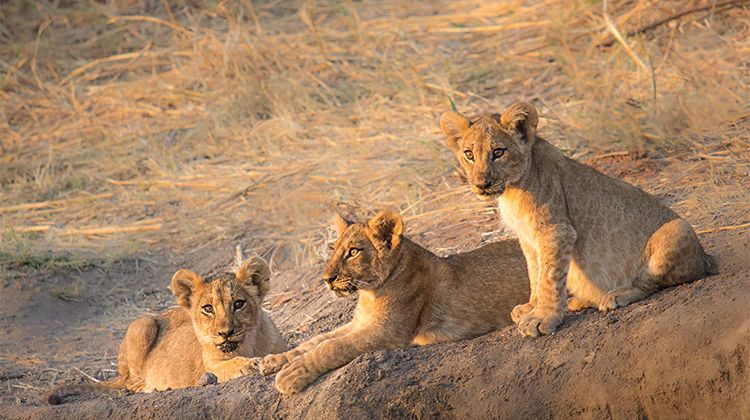
Predators thrive in this expansive ecosystem. Lions are commonly encountered, particularly near water sources and prey-rich floodplains. Leopards are present and regularly sighted along riverine forests, while spotted hyenas patrol the plains. Cheetahs are less common but do occur in open habitats, adding to the park’s predator diversity.
Aquatic wildlife defines the Nyerere experience. The Rufiji River supports dense populations of hippos and crocodiles, often seen at close range during boat safaris. These encounters offer a unique perspective on wildlife behavior rarely experienced in vehicle-only parks.
Birdlife is extraordinary, with hundreds of species recorded. Fish eagles, herons, storks, kingfishers, and migratory birds thrive in the riverine and wetland systems, making Nyerere a premier destination for birdwatchers.
Africa Travel Bureau emphasizes knowledgeable guiding and patient observation, allowing travelers to appreciate not only species diversity but also ecological interactions. In Nyerere, wildlife encounters are defined by space, silence, and scale—offering one of Africa’s most authentic safari environments.
Safari Activities: Land, Water & Foot
Experience Nyerere’s unique safari activities including game drives, boat safaris, and guided walking safaris.
Nyerere National Park offers the most diverse safari activity portfolio in Tanzania, allowing travelers to experience wildlife from multiple perspectives. This multi-dimensional approach is a defining feature of the park and a key reason it appeals to experienced safari-goers.
Classic game drives explore open plains, woodland corridors, and river edges, offering excellent opportunities to observe elephants, buffaloes, giraffes, lions, and antelope species. Because vehicle density is extremely low, game drives are flexible and unhurried, allowing guides to follow wildlife behavior naturally.
Boat safaris on the Rufiji River are a signature Nyerere experience. Drifting quietly along water channels brings guests close to hippos, crocodiles, and waterbirds without disturbance. Boat safaris offer exceptional photographic opportunities and a calm contrast to vehicle-based exploration.
Guided walking safaris further distinguish Nyerere from most other parks. Accompanied by armed rangers, guests explore the bush on foot, learning to read tracks, identify plants, and understand animal behavior from ground level. Walking safaris enhance awareness, education, and connection to the environment.
Africa Travel Bureau carefully balances these activities to avoid fatigue and maximize experience quality. By combining land, water, and walking safaris, we ensure that each day in Nyerere feels varied, immersive, and deeply engaging.
Lodges & Accommodation Options
Explore exclusive safari lodges and camps in Nyerere National Park offering comfort and wilderness immersion.
Accommodation in Nyerere National Park is designed to reflect its remote, conservation-focused character. Lodges and camps are widely spaced, ensuring privacy, minimal environmental impact, and uninterrupted wilderness experiences.
Most accommodations are located along the Rufiji River or its tributaries, offering direct access to boat safaris and prime wildlife corridors. Tented camps and lodges blend into the landscape using natural materials, open layouts, and shaded decks that invite guests to observe wildlife directly from camp.
Facilities emphasize comfort and authenticity rather than excess luxury. Spacious tents or chalets, en-suite bathrooms, attentive service, and open-air dining areas define the experience. Evenings are typically spent around campfires or enjoying river sounds under starlit skies.
Africa Travel Bureau selects accommodations based on location, guiding quality, sustainability practices, and guest comfort. Whether travelers prefer classic tented safaris or refined wilderness lodges, we ensure each option enhances the Nyerere experience.
Safari Itineraries & Route Combinations
Explore how Nyerere fits into southern Tanzania safari routes and extended itineraries.
Nyerere National Park is ideally positioned for southern Tanzania safari itineraries, often paired with Ruaha or Mikumi for comprehensive wilderness experiences. These combinations create journeys that balance accessibility, scale, and ecological diversity.
A popular pairing links Nyerere with Ruaha National Park, combining river-based safaris with predator-rich savannahs. Mikumi offers a convenient extension for shorter trips or road-based itineraries from Dar es Salaam.
Nyerere also works exceptionally well as a standalone fly-in safari for travelers seeking immersion without long itineraries. Africa Travel Bureau designs itineraries that ensure logical flow, minimal transit, and optimal wildlife exposure.
Travel Tips & Practical Information
Prepare for your Nyerere safari with practical travel tips and safety guidance.
Travelers should prepare for a remote safari environment with limited connectivity. Lightweight clothing, sun protection, insect repellent, and neutral colors are recommended. Africa Travel Bureau provides comprehensive pre-departure guidance to ensure comfort and safety.